You’ve probably had this exact debate in your head already. Do you grab a cheap template, get your site up in a weekend, and save your budget for marketing? Or do you invest more upfront in a custom-built site that’s made specifically for your business? If you’ve been going back and forth between custom web development vs WordPress template for weeks, you’re not alone. This is one of the most common decisions business owners in the Philippines get stuck on, and honestly, there’s no single right answer for everyone.
Here’s the thing though: this decision affects more than just how your website looks. It affects how fast you can grow, how much you’ll spend down the road, and how much control you actually have over your own online presence. Getting it wrong doesn’t always show up immediately. It shows up a year or two later, when your business has outgrown what your website can do.
Let’s break down both options honestly, no bias, so you can figure out which one actually fits where your business is headed.
What You’re Really Choosing Between
Before getting into pros and cons, it helps to be clear on what each option actually means.
A template, usually built on WordPress, is a pre-made design that thousands of other businesses can also buy and use. You customize the colors, upload your content, and you’re online fast. Think of it like buying a barong from a mall rack instead of having one tailored. It fits reasonably well, and it gets the job done.
Custom web development means building your website from the ground up, structured specifically around how your business actually works. It takes longer and costs more initially, but everything from the layout to the functionality is built for your needs, not adapted from someone else’s template.
Neither one is automatically the “better” choice. It depends on where your business is right now and where you’re trying to go.
The Case for Templates
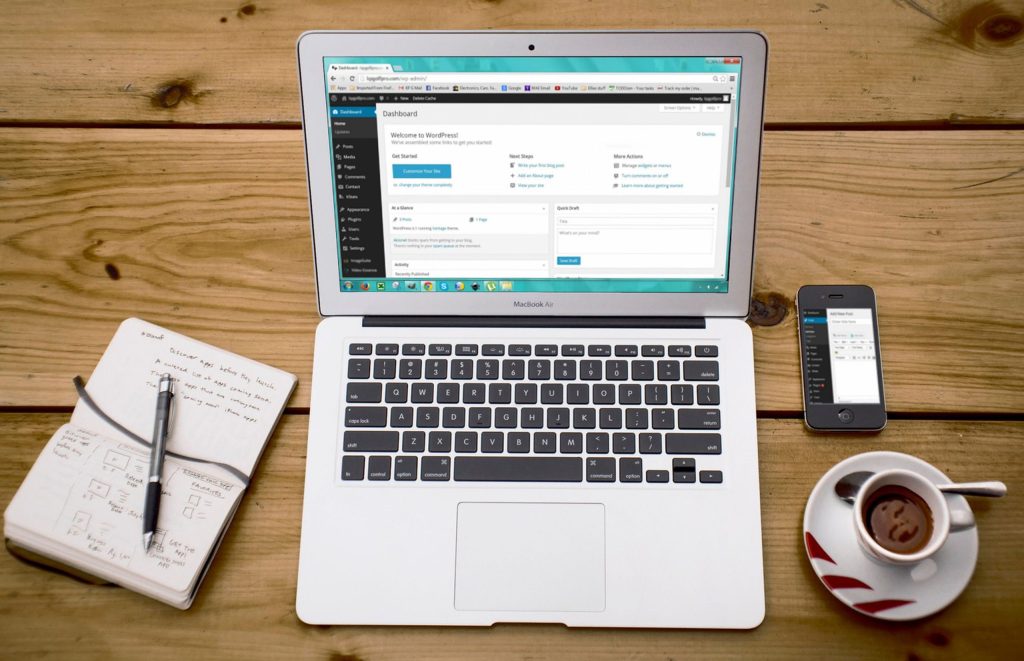
Let’s give templates their due credit, because for a lot of businesses, they genuinely make sense.
Where templates work well:
- You’re just starting out and need to test your business idea before investing heavily
- Your budget is genuinely tight and every peso needs to count right now
- Your website needs are fairly standard, like a simple portfolio, menu, or catalog
- You need something live within days, not weeks
WordPress Template Pros and Cons
WordPress templates are the most common route for small businesses in the Philippines, and there’s a reason for that. They’re affordable, there are thousands to choose from, and you don’t need to know how to code to get one running.
But here’s what often gets left out of the sales pitch:
- Templates are built to work for everyone in general, which means they rarely fit your specific business perfectly
- You’re often stuck with the plugin’s structure and limitations, even if it doesn’t match how you actually sell or serve customers
- As your business grows, templates often become harder to modify without breaking something
- Many templates come bloated with features you’ll never use, which can slow your site down
That last point matters more than people think. A slow website, template or not, quietly costs you customers before they even see what you’re offering.
The Case for Custom Web Development

Now, custom development isn’t about being fancy for the sake of it. It solves specific problems that templates simply can’t.
Where custom development makes sense:
- Your business has processes or workflows that don’t fit a standard template, like a unique booking system or specific inventory needs
- You’re planning to scale significantly in the next year or two
- Your website needs to integrate with other tools, like a CRM, payment gateway, or inventory system
- You want full ownership and flexibility over your site’s design and functionality, without being boxed in by a plugin’s limitations
Hiring a Custom Web Developer: What Changes
When you’re hiring a custom web developer instead of buying a template, you’re not just paying for design. You’re paying for a website built around how your business actually operates, and for someone who understands the technical side well enough to solve problems as your business grows.
This is where a lot of growing businesses in Davao eventually land. They started with a template because it made sense at the time, but as their operations became more complex, the limitations of that template started slowing them down instead of supporting them.
Real Scenarios: How This Plays Out

Scenario 1: The home-based baker in Toril. She starts with a simple template site to showcase her cakes and take orders through a contact form. It works fine for the first year. This is a case where a template genuinely made sense.
Scenario 2: The logistics company expanding across Mindanao. They started with a template but quickly needed real-time tracking, custom quote calculators, and integration with their internal systems. The template couldn’t keep up, and they had to rebuild from scratch anyway, at a higher cost than if they’d built custom from the start.
Scenario 3: The retail brand planning to scale nationwide. They knew from day one they’d need a scalable website solution that could handle growing product lines and multiple integrations. Going custom from the beginning saved them from a costly rebuild later.
The pattern is clear. The businesses that suffer most are the ones that outgrow their template and have to start over, often at a higher cost than if they’d chosen custom from the start.
Practical Tips to Help You Decide
Ask yourself these questions before choosing either path:
- Do I expect significant growth or changes to my business model in the next 1 to 2 years? If yes, lean custom.
- Does my business have unique processes that don’t fit a standard layout? If yes, a template will likely frustrate you.
- Is my current priority speed and budget, or long-term flexibility? Be honest about which one you actually need right now.
- Will I need to integrate with other systems, like payment gateways, booking tools, or inventory software? Templates often struggle here.
- Am I using website builders for small business needs as a stopgap, or as my final solution? There’s nothing wrong with starting simple, as long as you know it’s a stepping stone, not a permanent fix.
Where Rypaci Fits Into This Custom Web Development vs WordPress Template Decision
 \
\
At Rypaci IT Solutions, we don’t push every client toward custom development just because it’s a bigger project. We’ve worked with Davao businesses on both ends, some who genuinely needed a simple, budget-friendly template, and others who needed a fully custom, scalable system built around how they actually operate.
What we focus on is helping you understand custom web development vs WordPress template trade-offs specific to your situation, not a generic sales pitch. If a template fits your current stage, we’ll tell you that honestly. If your business is heading toward growth that a template can’t support, we’ll help you build something that won’t need to be rebuilt from scratch a year from now.
Make the Choice That Fits Where You’re Headed, Not Just Where You Are Today
There’s no universally right answer between templates and custom development. What matters is being honest about your business’s current needs and where you realistically expect to be in a year or two. Choosing based only on today’s budget, without thinking about tomorrow’s growth, is often what leads to a costly do-over down the line.
Not sure if you need a template or a custom website? Let Rypaci help you decide, talk to us today.